The raw material requirements for manufacturing paper cups involve two essential components: paper cup blanks and paper cup bottom rolls. These materials are crucial for forming a functional, leak-resistant, and sturdy paper cup.
Here’s a more detailed breakdown of these raw materials and their role in the production process:
1. Paper Cup Blank
Purpose: The paper cup blank is the flat sheet of paper that serves as the main body of the cup. It is formed into a cylindrical shape to create the walls of the cup.
Material:
- The paper used for the blank is typically a blend of wood pulp (derived from wood chips), with some manufacturers using recycled paper to reduce waste and cost.
- To ensure the paper’s durability and moisture resistance, it is often treated with a coating. This can be a low-density polyethylene (LDPE) layer or a biodegradable alternative like Polylactic Acid (PLA).
Process:
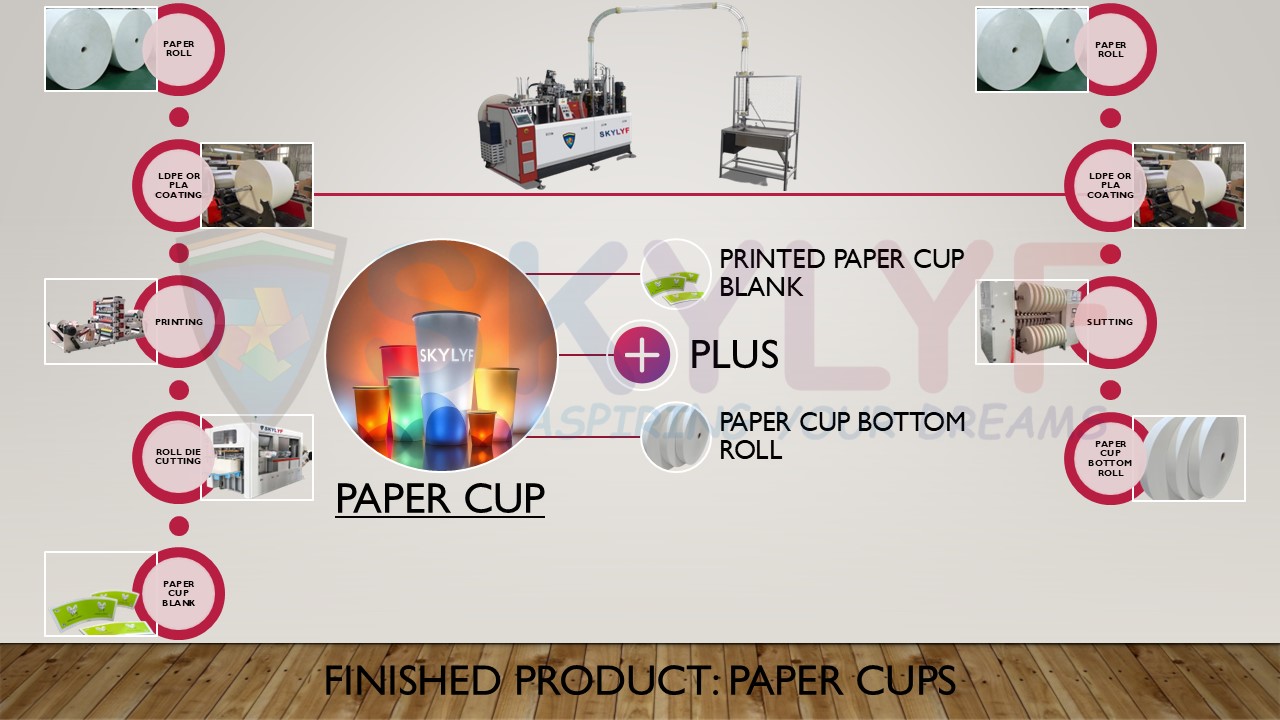
1. Paper Coating
2. Printing
3. Cutting
4. Paper Cup Blank Formation
2. Paper Cup Bottom Roll
Purpose: The paper cup bottom roll forms the base of the paper cup. It is critical for maintaining the cup’s stability, preventing leaks, and ensuring it can hold liquid without collapsing.
Material:
- Similar to the paper cup blank, the bottom roll is made from a wood pulp blend.
- However, the material for the bottom roll is often thicker or more rigid than the blank to provide additional strength and prevent the cup from buckling under the weight of the liquid.
Process:
1. Paper Coating
2. Slitting
3. Paper Cup Bottom Roll Formation
Flow Chart explaining Paper Cup Raw Material requirements for manufacturing Paper Cups

Additional Considerations
- Coatings and Lamination: Both the blank and the bottom roll may have additional coatings or laminations to ensure the cup’s resistance to heat, moisture, and liquid.
- Sustainability: With increasing concerns about environmental impact, manufacturers are exploring biodegradable coatings (e.g., PLA) as alternatives to LDPE, and using recycled paper for both the blanks and bottoms to minimize waste.
By carefully selecting these materials and processes, manufacturers ensure the paper cups are functional, durable, and capable of holding liquids without failure.